

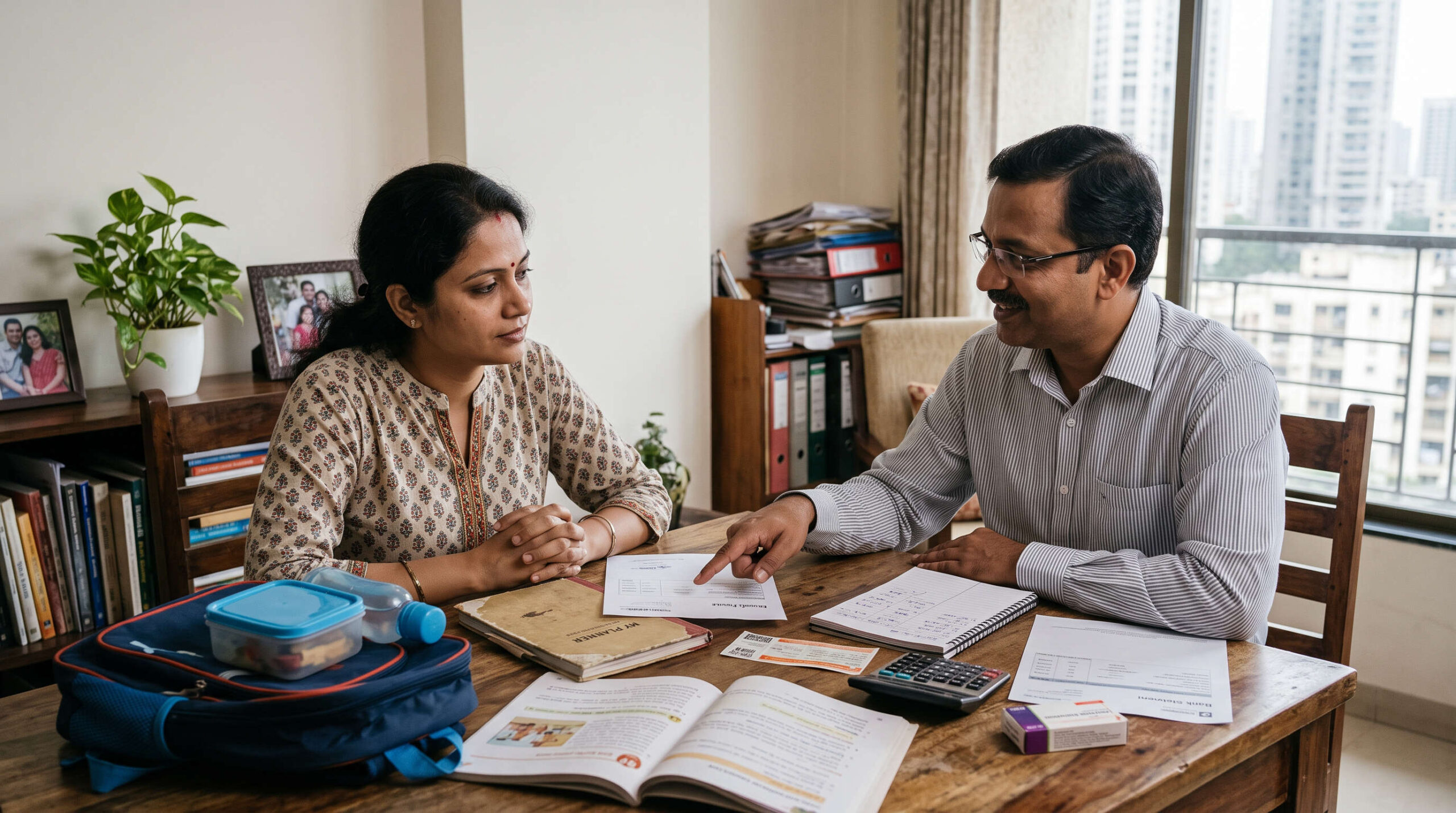
School fees are an important component of a child’s maintenance, but paying them does not automatically discharge a separate monthly-maintenance obligation. Some court orders include education within one consolidated amount; others direct monthly maintenance plus separate school fees. Always check the exact order or consent terms before claiming an adjustment.
What does child maintenance include?
Child maintenance may cover the child’s reasonable expenses for:
- food and housing;
- clothing and daily care;
- healthcare and insurance;
- school and educational costs;
- travel and transport;
- age-appropriate activities; and
- other needs connected with the child’s upbringing.
School tuition is therefore only one part. A Mutual Consent Divorce Lawyer should calculate the full budget instead of treating a fee receipt as the child’s entire cost of living.
Four ways courts and settlements deal with school fees
Consolidated maintenance
One monthly figure may include ordinary education costs. The order should ideally explain what was considered.
Maintenance plus actual fees
One parent may be directed to pay monthly maintenance and bear school fees separately. Neither obligation replaces the other.
Proportionate sharing
Parents may share education costs according to a fixed ratio or comparative income.
Direct institutional payment
A parent may pay the school directly and send the receipt to the other parent. This arrangement is useful only when reflected clearly in the order or agreement.
An Experienced Divorce Lawyer in Mumbai should review the operative clause, not rely on what either parent remembers from negotiations.
Can school-fee payments be adjusted against monthly maintenance?
Only where the order, settlement or later court direction permits the adjustment. A parent should not deduct fees unilaterally.
For example, if an order requires ₹20,000 monthly maintenance “in addition to school fees,” the payer ordinarily cannot subtract a quarterly fee from the monthly amount. If the order grants one consolidated amount specifically including fees, direct payment may require clarification to prevent double counting.
A Best Divorce Advocate in Mumbai can request interpretation or modification where language is unclear.
Recent 2026 developments
In June 2026, the Madhya Pradesh High Court was reported to have directed a father to bear more than ₹46 lakh toward the professional education of his daughters in a maintenance matter. The development highlighted that education can remain a serious parental responsibility, depending on the facts and law involved.
In July 2026, reports concerning a Bombay High Court decision addressed shared financial responsibility between earning parents, including a child’s education. This does not create an automatic 50:50 rule. Income, caregiving, established lifestyle and the child’s needs can influence allocation.
Courts therefore examine evidence not slogans such as “the father always pays” or “both parents must pay exactly half.”
What factors may the court consider?
- the child’s age and educational stage;
- the existing school and continuity needs;
- actual fee demands and related expenses;
- each parent’s income, assets and liabilities;
- the standard of living enjoyed before separation;
- caregiving and housing provided by the custodial parent;
- special educational or medical needs; and
- whether the school choice was jointly made.
What if one parent chooses an expensive school alone?
The court may examine whether the change was reasonable, affordable and in the child’s interests. Prior consultation matters, particularly where the fee is far higher than the previous school.
The paying parent should not simply refuse and risk interruption of the child’s education. The custodial parent should not assume that every unilateral expense will automatically be reimbursed. Seek timely directions if agreement is impossible.
Does the custodial parent’s salary matter?
Yes, but salary is not the only contribution. The parent caring for the child may provide housing, food, supervision, transport and daily labour. Equal parental responsibility does not automatically mean equal cash payment.
A Best Family Lawyer Mumbai should disclose both parents’ resources and identify non-cash caregiving contributions.
Can education expenses continue after eighteen?
The answer depends on the applicable law, the child’s circumstances and the nature of the proceeding. Recent cases have considered higher-education expenses for adult daughters, but no single headline should be applied universally. Obtain advice before stopping support solely because the child turned eighteen.
How should mutual-divorce terms be drafted?
A Best Mutual Divorce Lawyer Mumbai or Mutual Divorce Advocate Mumbai should specify:
- monthly child-support amount;
- whether tuition is included or additional;
- responsibility for admission and annual fees;
- books, uniform, transport and devices;
- sharing ratio and payment deadline;
- direct payment or reimbursement procedure;
- prior consultation for school changes;
- fee-hike treatment;
- extracurricular and medical expenses; and
- planning for college or vocational education.
A Mumbai Top Mutual Divorces Lawyer Mumbai should avoid phrases such as “all education expenses” unless the parties understand exactly what that includes.
What evidence is required?
Preserve the maintenance order, fee schedule, invoices, receipts, bank records and school communications. Maintain a year-wise spreadsheet of compulsory and optional expenses. Share bills within the deadline stated in the settlement.
Payments should be traceable. If one parent pays in cash, obtain an institutional receipt. Screenshots of payment requests are less useful than official invoices and bank entries.
Frequently asked questions
If I pay school fees, can I stop monthly maintenance?
Not unless the order or a later court direction permits it.
Can school fees be ordered separately?
Yes. Orders and settlements often distinguish monthly living support from actual educational expenses.
Must both parents pay exactly half?
Not necessarily. Contribution may depend on income, resources, caregiving and the facts.
Does maintenance include uniforms and books?
It may. Clear orders should state whether these are included, additional or proportionately shared.
Can fees be paid directly to the school?
Yes, where agreed or directed. Keep receipts and share proof promptly.
Can a parent demand reimbursement without bills?
The court may require proof. Official demands and receipts reduce disputes.
Choosing legal assistance in Mumbai
Searches for TOP 3 Contested Divorce Lawyer Mumbai, TOP 10 Divorce Lawyer Mumbai, Top 10 Family Lawyer Lawyer Mumbai, best divorce lawyer in Mumbai and Best Divorce Advocate in Mumbai may offer options. Choose someone who reads financial orders carefully, separates monthly and extraordinary expenses and provides transparent Divorce Lawyer Fees Mumbai.
Conclusion
School fees may form part of child maintenance, but paying them does not automatically satisfy every support obligation. Read the order carefully, preserve proof and seek clarification before making deductions.
Easy Divorces helps parents understand child-support directions and prepare precise consent terms covering school fees, living costs and future education. Contact Easy Divorces before an unclear payment arrangement turns into maintenance arrears or interrupted schooling.