

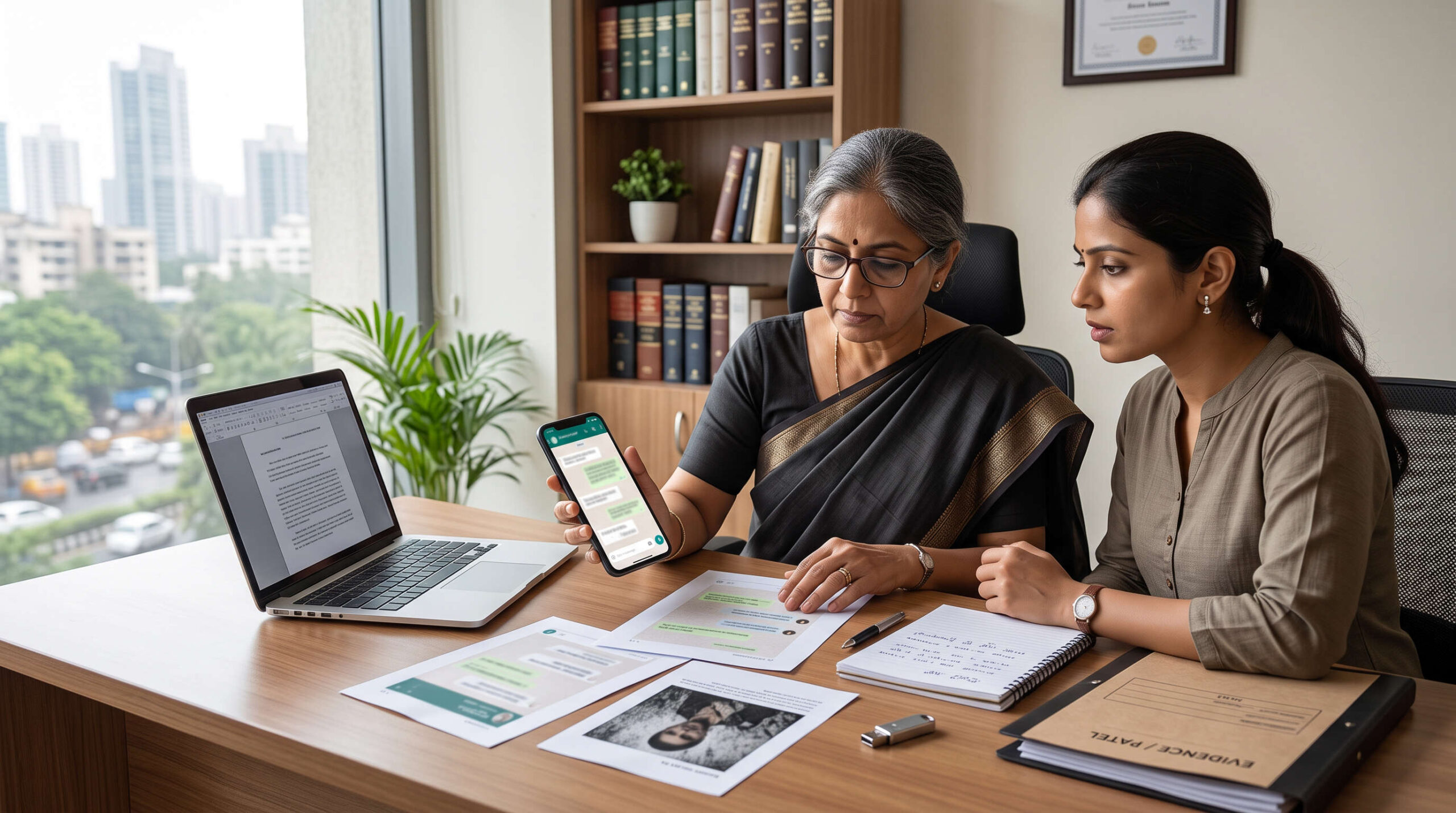
If your spouse produces a deepfake photograph or fabricated chat in a matrimonial case, do not delete it or respond publicly. Preserve the original material, dispute its authenticity specifically, ask for the source device and complete conversation, check compliance with electronic-evidence requirements, and consider a court-directed forensic examination. A screenshot is not automatically reliable simply because it resembles WhatsApp or carries your photograph.
What counts as fabricated digital evidence?
Fabrication can take several forms:
- a completely invented WhatsApp, Instagram or SMS conversation;
- genuine messages placed in a false order;
- a contact name changed before taking screenshots;
- dates, timestamps or message text digitally edited;
- deleted context that changes the meaning of a conversation;
- a face inserted into another person’s photograph or video;
- AI-generated intimate imagery;
- cloned audio made to sound like a spouse; or
- a genuine file accompanied by a false claim about when, where or why it was created.
These distinctions matter. The defence to an edited screenshot may differ from the defence to a completely synthetic video. An Experienced Divorce Lawyer in Mumbai should identify exactly what is disputed instead of making a vague claim that “everything is fake.”
Are WhatsApp chats admissible in matrimonial cases?
Electronic records can be considered in Indian proceedings, subject to the governing law and the manner in which they are produced. The Bharatiya Sakshya Adhiniyam, 2023 recognises electronic and digital records, and Section 63 addresses conditions and certification concerning electronic records produced from devices.
Family Courts also have statutory flexibility to receive material that may assist them. But receiving a document is not the same as accepting every allegation within it as true. Authenticity, completeness, authorship, context and weight can still be challenged.
In March 2026, the Bombay High Court reportedly set aside a Nashik Family Court divorce decree in Gaurav Jitendra Patil. According to published reports, the decree had relied principally on WhatsApp chats that were not properly proved, and the wife did not receive an adequate opportunity to test the material through cross-examination. The case was remanded for reconsideration.
This does not create a rule that all chats are inadmissible. It reinforces a practical principle: digital material should be proved and fairly tested before it determines a marriage.
Seven steps to challenge a fake chat or deepfake
1. Preserve the exact material
Keep the original attachment, message, email or link. Save the surrounding conversation. Record the date, time, sender and platform. Avoid cropping or repeatedly re-saving the file because doing so may alter metadata or compression information.
2. Give a specific denial
Identify whether you deny sending the message, dispute only part of the conversation, deny the account, or allege alteration after transmission. Precision gives the court a question it can investigate.
3. Ask for the complete source
Selected screenshots may omit important context. Through the appropriate process, your lawyer may seek the complete chat export, original device, account information or other source material. A Best Divorce Advocate in Mumbai should frame this request narrowly enough to protect unrelated personal data.
4. Examine the electronic-record certificate
Where Section 63 applies, check whether the certificate identifies the record and relevant device and contains the required particulars. A defective or missing certificate can be important, although its effect must be assessed in the context of the proceeding and how the original record is produced.
5. Seek forensic analysis when proportionate
A qualified expert may examine metadata, file structure, editing traces, audio waveforms, compression patterns, inconsistencies between frames or differences between a screenshot and the application’s normal interface. Online AI detectors alone should not be treated as final proof.
6. Compare independent evidence
Test the allegation against bank entries, travel data, CCTV, email logs, lawful location information, other devices and witness testimony. A fabricated story often breaks when compared with reliable external facts.
7. Cross-examine the person producing it
Ask who captured the screenshot, when it was captured, where the original phone is, whether the chat was exported, whether any messages were deleted and how the file moved from the device to the document filed in court. Chain of custody matters.
What should you never do?
Do not hack your spouse’s account, install spyware, impersonate another person or secretly alter files to “prove” they can be altered. Do not threaten the other party online. Do not circulate intimate material to friends or family. These actions can create separate legal exposure and obscure a strong authenticity challenge.
If the content suggests immediate danger, extortion or cyber fraud, seek urgent assistance. Preserve evidence before requesting a platform takedown. A Best Family Lawyer Mumbai may need to coordinate matrimonial relief with a cybercrime complaint or injunction.
How can you tell whether a photograph may be manipulated?
Possible indicators include unusual shadows, mismatched lighting, distorted hands or jewellery, unnatural facial boundaries, inconsistent reflections, altered backgrounds or unusual compression. In audio or video, unnatural cadence, lip-sync mismatch and abrupt tonal changes may raise questions.
These are only indicators. Genuine media can contain visual glitches, while sophisticated deepfakes may look smooth. The proper question is not, “Does this look strange to me?” It is, “Can its source and integrity be verified?”
Recent developments show why authenticity matters
Deepfakes have moved from a theoretical concern to a public-policy issue. In October 2025, MeitY released proposed amendments addressing synthetically generated information, with measures relating to user declarations, labelling and metadata. These proposals reflect growing concern about AI-enabled impersonation but should not be represented as automatic proof rules for divorce cases.
Separately, a 2025 Kolkata matrimonial and dating-app fraud investigation reportedly involved fake WhatsApp screenshots, forged receipts and fabricated documents. It was a criminal fraud matter—not a divorce ruling—but it illustrates how realistic digital records can be built to create trust or pressure.
Can fake evidence influence an interim order?
Potentially. Courts sometimes make interim decisions on custody, maintenance, residence or protection before a full trial. Apparently alarming chats may affect the early picture unless they are challenged clearly and promptly.
Your response should distinguish urgency from overreaction. If the material is irrelevant to the relief sought, a costly expert exercise may not be necessary. If it is central – for example, an alleged threat concerning a child, a focused forensic and evidentiary response may be justified. Discuss scope and Divorce Lawyer Fees Mumbai in advance.
How does this affect mutual-consent divorce?
Fake or manipulated content may be used to intimidate a spouse into accepting unfair settlement terms. Preserve any accompanying threat. Do not sign simply to prevent embarrassment without understanding your options.
A Mutual Consent Divorce Lawyer can review the alleged material, settlement terms and litigation risk together. A Best Mutual Divorce Lawyer Mumbai or Mutual Divorce Advocate Mumbai may also include carefully drafted provisions concerning confidentiality, deletion or return of personal information, withdrawal of allegations and future misuse of private content.
A Mumbai Top Mutual Divorces Lawyer Mumbai should never promise that one clause can prevent every future misuse. The agreement should be realistic, enforceable and coordinated with any necessary protective remedy.
Frequently asked questions
Is a screenshot enough to prove adultery?
Not automatically. The person relying on it may need to establish authenticity and connect it with other evidence. The legal relevance of a chat also depends on what it actually proves.
Can I ask the court to send a phone for forensic testing?
Your lawyer may seek appropriate directions where authenticity is genuinely material. The court will consider relevance, necessity, privacy and proportionality.
What if the original phone has been lost?
That does not produce one automatic outcome. The court may examine backups, surrounding evidence, the explanation for loss, certification and reliability of the copy.
Can deleted messages be recovered?
Sometimes data may remain in backups, linked devices or forensic artefacts, but recovery is not guaranteed. Avoid experimenting with the device before obtaining technical advice.
Should I use an online deepfake detector?
It may offer an initial clue, but it should not be treated as conclusive evidence. Preserve the original file and use a qualified forensic professional when the issue is important.
Can I file a cybercrime complaint?
Depending on the nature of the conduct – such as impersonation, extortion, intimate-image abuse or fraud, a cybercrime complaint may be appropriate. The facts determine the available offences and remedies.
Choosing the right legal help in Mumbai
Searches such as TOP 3 Contested Divorce Lawyer Mumbai, TOP 10 Divorce Lawyer Mumbai, Top 10 Family Lawyer Lawyer Mumbai, best divorce lawyer in Mumbai and Best Divorce Advocate in Mumbai may generate options. The better questions are whether the lawyer understands digital evidence, can work with a credible forensic expert, protects privacy and explains the evidentiary weaknesses on both sides.
Ask for clarity on strategy, likely applications, expert costs and Divorce Lawyer Fees Mumbai. No responsible lawyer can guarantee that a court will reject digital evidence before examining how it was produced and tested.
Conclusion
Deepfake images and fabricated chats can be challenged through a combination of preservation, precise denial, source-device examination, Section 63 analysis, forensic expertise, independent corroboration and cross-examination. Recent Bombay High Court reporting offers a timely warning against deciding a divorce merely on unproved WhatsApp chats, but each case still depends on its own evidence.
Easy Divorces assists clients in evaluating disputed digital material and choosing a focused legal response. If suspicious chats, cloned audio or manipulated photographs are being used in your matrimonial matter, contact Easy Divorces before deleting files, surrendering a device or responding publicly.